 HERMES SOCRATICUS
Digital infrastructure
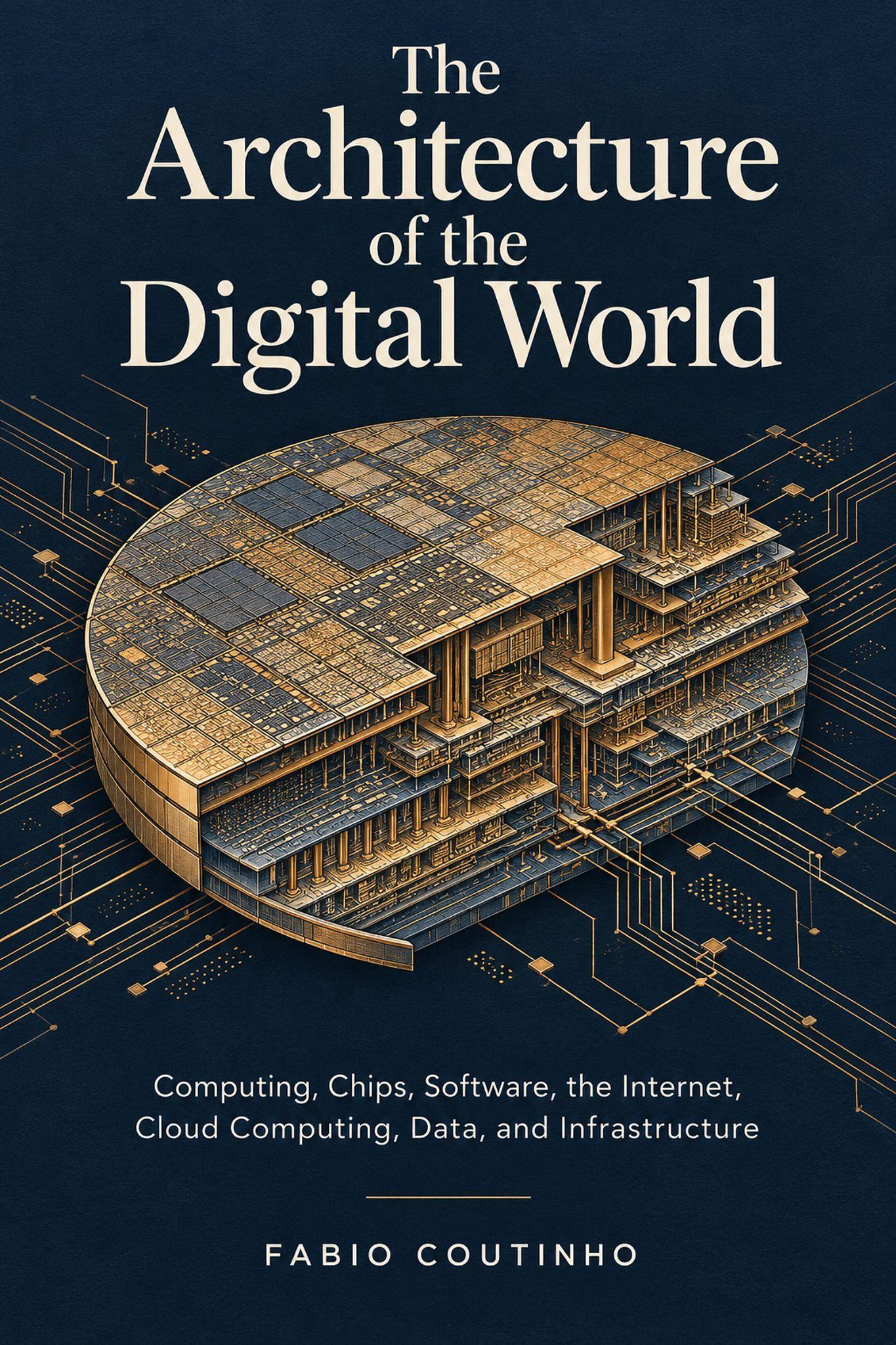
The Architecture of the Digital World
Computing, Chips, Software, the Internet, Cloud Computing, Data, and Infrastructure
How does the digital world we use every day actually work?
The argument
This book offers a broad guide to the infrastructure behind modern computing-from processors and semiconductors to software, the internet, cloud computing, data, and digital platforms.
It explains how computers process information, how chips are made, and why semiconductors have become strategically important. It follows the movement of data across the internet, explores the physical infrastructure behind cloud computing, and examines how data centers support digital services and artificial intelligence.
Beyond explaining the technology, the book looks at its consequences and vulnerabilities: cybersecurity, technological dependence, cascading failures, digital resilience, energy and water consumption, concentration of computing power, and the growing geopolitical importance of digital infrastructure.
An accessible, wide-ranging introduction for readers who want to understand how digital technology works-and the systems, resources, and risks behind the screens.
Read around the book
Continue the investigation.
How Are Computer Chips Made? Inside the Semiconductor Manufacturing Process
Modern computer chips contain billions of microscopic electronic components packed into an area that can fit on a fingertip. They power smartphones, computers, cars, data centers, medical devices, communication systems, and countless other technologies. Producing them requires far more than simply assembling tiny parts. The semiconductor manufacturing process combines advanced circuit design, materials science, chemistry, optics, physics, precision machinery, and extremely controlled factory environments. A modern chip is built through hundreds or even thousands of carefully coordinated operations, many of which must work at scales measured in nanometers.
Why Are Semiconductors So Important to the Global Economy?
Semiconductors are essential to the global economy because they provide the computing and control functions behind modern technology. They are found in smartphones, vehicles, telecommunications networks, factories, data centers, medical equipment, payment systems, military hardware, and countless other products. What began as a specialized electronics industry has become part of the basic infrastructure of economic activity. The importance of semiconductors now extends far beyond the technology sector because almost every major industry depends on reliable access to chips.
How Does the Internet Actually Work? From Data Packets to Global Networks
The internet feels almost instantaneous. You type a website address into a browser, press Enter, and within seconds a page appears with text, images, videos, and interactive elements. Behind that simple action, however, a large number of systems work together. Computers identify one another, networks choose routes, data is broken into small pieces, and standardized rules make sure information can travel across equipment owned by many different organizations. Understanding how does the internet work means looking at this chain of communication from the user’s device to distant servers and back again.
Undersea Internet Cables: How the World Stays Connected
Undersea internet cables carry most of the data that moves between continents. Although the internet often seems wireless and almost abstract, its global operation depends heavily on physical infrastructure lying across the ocean floor. These cables connect countries, data centers, telecommunications networks, cloud platforms, financial systems, and millions of users. Without them, international digital communication would be slower, more expensive, and far less reliable.
What Is Cloud Computing and How Does It Actually Work?
Cloud computing is a way of accessing computing resources over a network instead of owning and managing all the required hardware directly. Those resources can include processing power, data storage, databases, networking, software, and specialized services. When a company stores files in the cloud, runs an application on a remote platform, or rents powerful servers for a temporary project, it is using physical computers located somewhere else but accessing their capabilities as a service.
Who Controls the Cloud? The Power of Big Tech Over Digital Infrastructure
Cloud computing is often presented as a flexible, decentralized way to access computing power, storage, and software. In practice, however, much of the global cloud infrastructure is operated by a relatively small number of very large technology companies. This cloud computing market concentration has important consequences because businesses, governments, financial institutions, media platforms, and public services increasingly depend on infrastructure they do not directly control.
How Do Data Centers Work? Inside the Infrastructure Behind the Internet
Data centers are the physical facilities that keep much of the digital world running. Websites, cloud applications, banking systems, streaming platforms, business software, artificial intelligence services, and online communication tools all depend on computers housed in specialized buildings designed for continuous operation. Understanding how do data centers work means looking beyond servers themselves and examining the complex systems for power, cooling, networking, storage, security, and redundancy that make digital services reliably available.
AI Infrastructure Explained: GPUs, Data Centers, Energy and Computing Power
Modern artificial intelligence depends on far more than algorithms and software. Behind every advanced AI system is a large physical infrastructure made up of processors, memory, storage, high-speed networks, data centers, cooling systems, and enormous amounts of electricity. As AI models become larger and more capable, the infrastructure required to train and operate them has become an important part of the technology economy. Understanding AI infrastructure means understanding the machinery that makes artificial intelligence possible at scale.
How Much Energy Does AI Use? The Hidden Power Demands of Artificial Intelligence
Artificial intelligence requires electricity because every calculation performed by an AI system ultimately takes place on physical computing hardware. Large models may appear to exist only as software, but they run on processors installed in data centers, supported by memory, storage, networking equipment, cooling systems, and electrical infrastructure. As AI becomes more widely used, AI energy consumption is becoming an important issue not only for technology companies but also for utilities, data center operators, policymakers, and businesses planning future computing capacity.
Why Do Data Centers Need Water? The Environmental Cost of Digital Infrastructure
Data centers are often described as part of the digital economy, but their operation depends on very physical resources. Electricity powers servers, processors, storage systems, and networks, while cooling systems remove the heat produced by all that equipment. In many facilities, water plays an important role in this cooling process. Water is also essential to semiconductor manufacturing, where extremely pure water is used repeatedly to clean wafers and support the production of advanced chips. As computing and artificial intelligence expand, data center water consumption has become an increasingly important environmental issue.
How Do Recommendation Algorithms Work on YouTube, TikTok and Social Media?
Recommendation algorithms are systems designed to choose which pieces of content a user is most likely to find relevant from an enormous pool of possibilities. On platforms such as YouTube, TikTok, Instagram, Facebook, streaming services, online stores, and news apps, there are far too many videos, posts, products, and articles for anyone to browse manually. Recommendation systems solve this problem by predicting what each person may want to see next and ranking available options accordingly.
How Do Cyberattacks Work? Understanding the Weaknesses of Digital Systems
Cyberattacks work by exploiting weaknesses in digital systems, human behavior, or the relationships between different technologies. An attacker does not always need to break through a sophisticated security barrier. Sometimes the entry point is an unpatched application, a misconfigured cloud service, a stolen password, or a convincing message that persuades someone to reveal sensitive information. Understanding how do cyberattacks work therefore requires looking at security as a complete system rather than as a single product such as antivirus software.