 HERMES SOCRATICUS
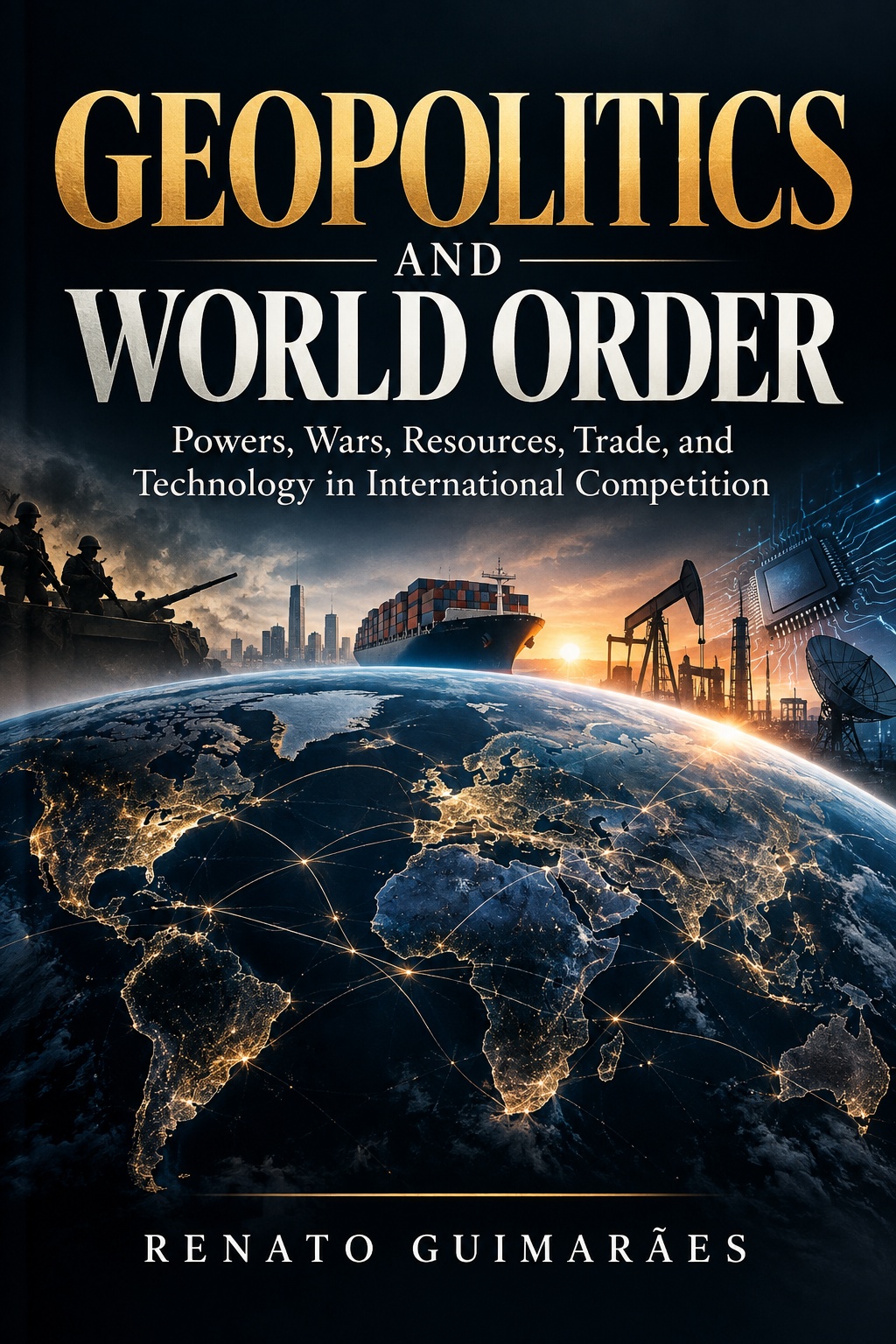
Geopolitics & world order
Geopolitics and World Order
Powers, Wars, Resources, Trade, and Technology in International Competition
How does power work in a world where wars, trade, technology, natural resources, and supply chains have become part of the same strategic competition?
The argument
Geopolitics and World Order offers a broad examination of the forces shaping international relations and determining how states acquire, exercise, and preserve power. Beginning with the foundations of geopolitics—sovereignty, territory, population, security, influence, and alliances—the book explores how competition between nations now extends far beyond military strength into economics, technology, finance, energy, and strategic infrastructure.
The book examines war and military power, great-power rivalry, international trade, economic sanctions, trade wars, natural resources, oil and gas, critical minerals, and the global energy transition. It also explores the increasingly decisive role of global supply chains, semiconductors, artificial intelligence, cybersecurity, data, and digital infrastructure in shaping national power.
Rather than simply asking which countries possess the greatest resources, the analysis focuses on how dependencies are created, exploited, and reduced. Integration into the global economy can generate prosperity while simultaneously exposing countries to disruptions in trade routes, financial networks, technologies, suppliers, and industrial production. Technological leadership can create strategic advantages while producing new dependencies on energy, minerals, advanced chips, manufacturing capacity, and specialized knowledge.
The book also examines the transformation of the international order, including hegemony, unipolarity, multipolarity, economic fragmentation, strategic autonomy, and the changing balance between interdependence and national security.
In a world where nations remain deeply connected while seeking greater control over their vulnerabilities, understanding geopolitics requires looking beyond armies and borders. Factories, ports, currencies, energy systems, digital networks, technologies, resources, and alliances have all become instruments of international power.
Read around the book
Continue the investigation.
What Is Geopolitics? How Geography, Power, Resources, and Security Shape World Politics
Geopolitics is the study of how geography and other material conditions influence the way states pursue power, security, prosperity, and influence. It begins with a simple observation: countries do not operate in an abstract political space.
How Geography Shapes Global Power: Borders, Seas, Mountains, and Strategic Location
Geography influences the opportunities and constraints that every state faces. Countries differ in size, terrain, climate, neighbors, access to oceans, natural resources, transport routes, and distance from major centers of economic or military activity.
Why Maritime Chokepoints Matter: How Straits and Trade Routes Shape Global Power
Global trade depends heavily on the sea. Ships transport enormous quantities of oil, gas, food, minerals, manufactured products, vehicles, industrial equipment, and consumer goods between continents.
How Demographics Shape National Power: Population, Aging, Migration, and the Workforce
Population is one of the foundations of national power, but size alone reveals surprisingly little.
What Is the Security Dilemma? Why Defensive Actions Can Make Countries Less Safe
The security dilemma describes one of the most persistent problems in international politics: actions taken by one country to make itself safer can unintentionally make other countries feel less safe.
Why Military Alliances Exist: Security, Deterrence, and the Balance of Power
Military alliances exist because states rarely have enough resources to manage every security threat alone. By cooperating, countries can combine armed forces, intelligence, technology, logistics, industrial capacity, geographic access, and political influence.
Economic Sanctions Explained: How Countries Use Trade, Finance, and Technology as Weapons
Economic sanctions allow governments to impose costs on other states, companies, organizations, or individuals without immediately resorting to military force.
Energy Geopolitics Explained: Oil, Gas, Electricity, and the New Energy Transition
Energy is one of the foundations of modern power. Economies need it to operate factories, transport goods, heat and cool buildings, run data centers, power communications systems, produce food, and support military operations.
Critical Minerals and Geopolitics: Why Resources Still Matter in the Technology Age
The digital economy may appear weightless, but it depends on enormous quantities of physical materials. Smartphones, electric vehicles, wind turbines, satellites, data centers, telecommunications networks, batteries, advanced weapons, and electricity grids all require minerals extracted from the earth.
Why Semiconductors Have Become a Geopolitical Weapon
Semiconductors are among the most strategically important products in the global economy because they form the computing foundation of modern life. They are embedded in smartphones, vehicles, telecommunications equipment, industrial machinery, medical devices, financial systems, weapons, satellites, and data centers.
Technology as Geopolitical Power: AI, Semiconductors, Telecom, and Strategic Competition
Technology has become one of the main foundations of geopolitical power because it influences economic productivity, military capability, intelligence, communications, industrial competitiveness, and control over global standards. States that lead in strategic technologies can gain advantages that extend far beyond commercial markets.
Cyber Power Explained: Why Cybersecurity Is Now a Matter of National Security
Cybersecurity was once treated mainly as a technical problem involving computers, passwords, and software vulnerabilities. Today it is a national security issue because modern states depend on digital networks for almost every essential function.