 HERMES SOCRATICUS
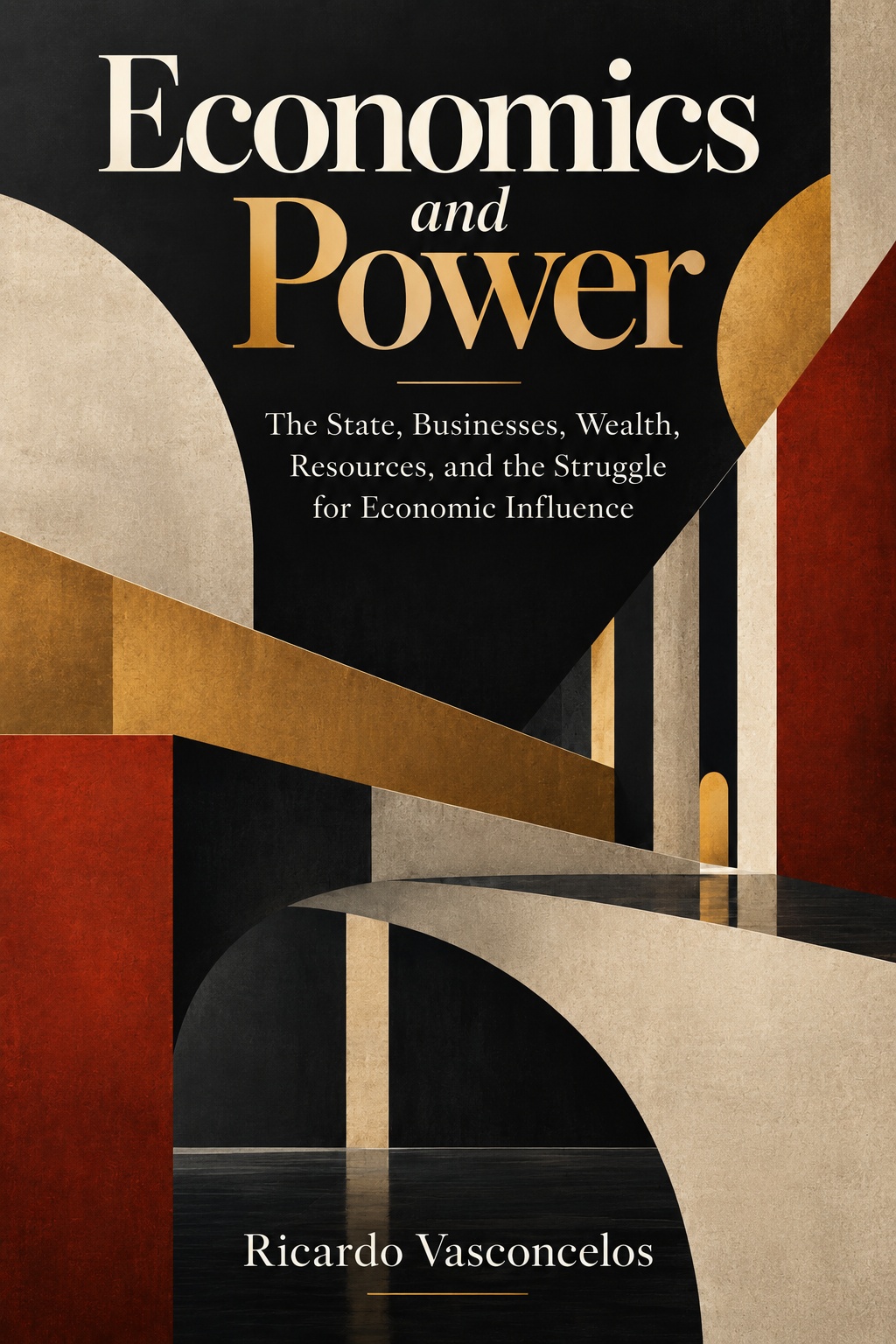
Economics & power
Economics and Power
The State, Businesses, Wealth, Resources, and the Struggle for Economic Influence
Resources do not determine only what a society can produce. They also influence who can make decisions, negotiate, and exercise power. This book examines economic power, property, income, wealth, and control over resources to show how the distribution of wealth expands or limits the possibilities available to individuals, companies, and governments.
The argument
By examining the relationship between the state and the economy, the book explores taxation, public spending, regulation, infrastructure, money, and fiscal policy. It also addresses inequality, wealth concentration, social mobility, and redistribution, showing how different mechanisms affect income, wealth, access to opportunities, and the ability to influence economic decisions.
Companies, markets, and governments emerge as forces that cooperate, compete, and struggle for influence within the economic system. The book explores corporations, lobbying, market concentration, state-owned enterprises, industrial policy, and control over strategic resources such as energy, food, minerals, technology, data, and infrastructure.
The analysis then expands to the international economy, connecting trade, sanctions, currencies, supply chains, and rivalry between nations. By linking capitalism, financial markets, technology, economic dependence, and strategic autonomy, the book helps readers understand how wealth, resources, and institutional capacity shape contemporary struggles for economic power.
Read around the book
Continue the investigation.
What Is Economic Power? How Wealth, Resources, and Control Shape the Economy
Economic power is the ability to influence economic decisions, shape the conditions under which exchanges take place, and affect what other people, businesses, or institutions are able to do. Wealth can be an important source of this power, but the two are not the same.
How Wealth Creates Economic Power and Expands Individual Freedom
Wealth changes economic life in ways that go far beyond the ability to buy more goods. A higher income may improve living standards, and a larger stock of savings or property may support greater consumption, but the deeper effect of wealth is that it expands the range of choices a person can realistically make.
Income vs. Wealth: Why the Difference Matters More Than You Think
Income and wealth are closely connected, but they describe two very different parts of a person's financial position. Income is money received over time.
Why Ownership Is One of the Most Powerful Forces in the Economy
Ownership is one of the main ways economic resources are turned into decision-making power. To own something is not simply to possess an object or record its value on a balance sheet.
What Is Bargaining Power? Why the Ability to Walk Away Changes Everything
Bargaining power is the ability to influence the terms of an agreement because you can afford to reject unfavorable conditions. It appears in wages, business contracts, loans, rent, supplier relationships, acquisitions, and countless everyday transactions.
Economic Concentration: When Big Companies Become Too Powerful
Economic concentration occurs when a relatively small number of companies control a large share of a market. Concentration is not automatically harmful.
How Corporate Power Becomes Political Influence
Corporate power becomes political influence when economic resources give companies unusual capacity to shape public decisions. Large firms do not need to control governments directly to matter politically.
What Is Regulatory Capture? How Powerful Industries Can Influence the Rules
Regulatory capture occurs when a public institution created to supervise an industry becomes excessively influenced by the interests of the companies or groups it is supposed to regulate.
How Taxes Redistribute Economic Power
Taxes are usually described as a way for governments to raise money. That is one of their most important functions, but it is not their only effect.
Wealth Inequality Explained: Income, Assets, Opportunity, and Economic Power
Economic inequality is often discussed as if it were simply a difference in salaries. One person earns more, another earns less, and the gap between them is treated as the measure of inequality.
Why Energy Security Is a Source of Economic and Geopolitical Power
Energy is not just another commodity traded in markets. It is a basic input into almost every part of a modern economy.
Critical Minerals and Economic Power: Why Natural Resources Still Matter
Digital technologies can make the modern economy appear increasingly weightless. Software, cloud computing, artificial intelligence, financial networks, and online services seem to depend more on information than on physical resources.