 HERMES SOCRATICUS
Digital finance
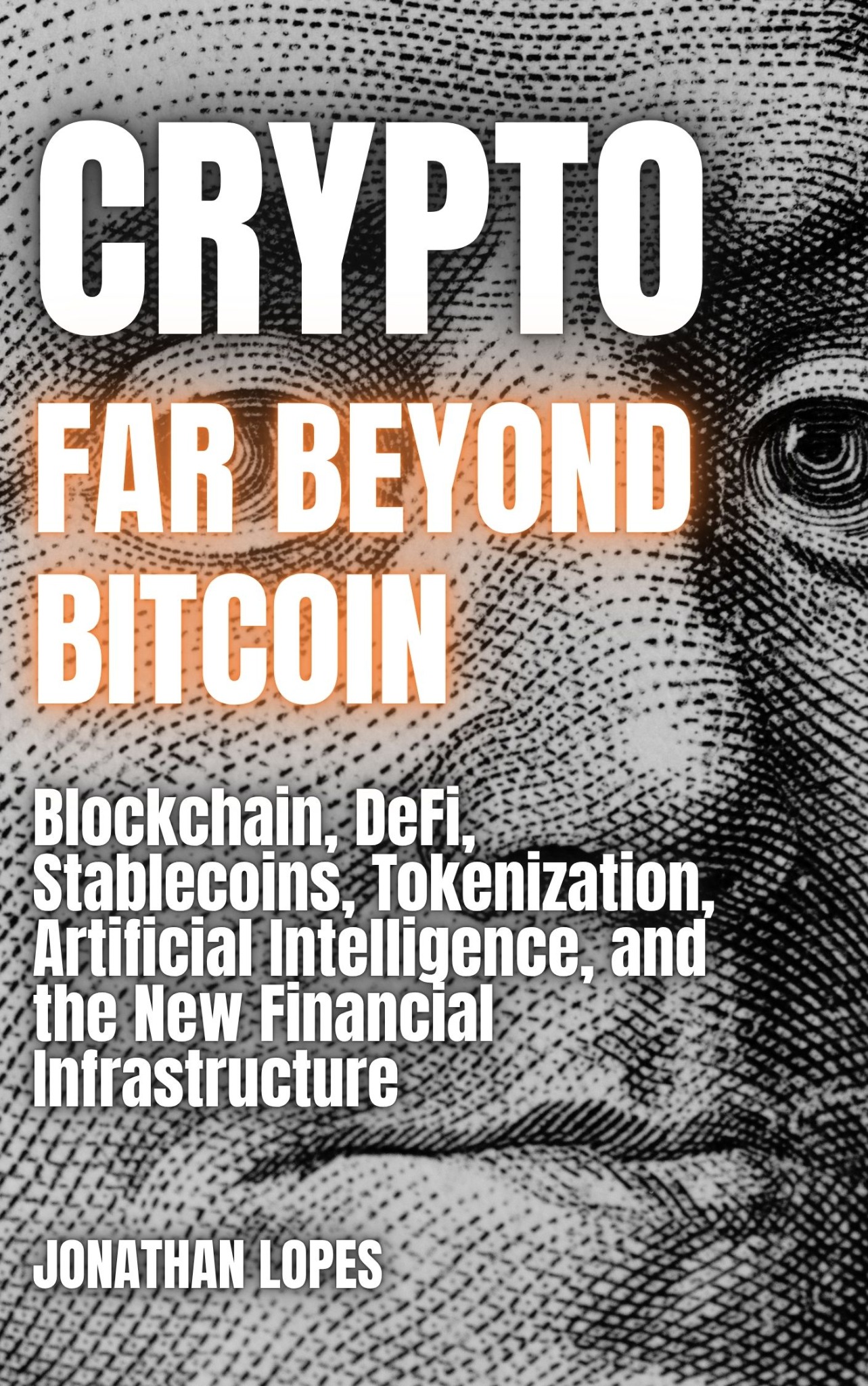
CRYPTO: Far Beyond Bitcoin
Blockchain, DeFi, Stablecoins, Tokenization, Artificial Intelligence, and the New Financial Infrastructure
The crypto market goes far beyond Bitcoin and cryptocurrency trading. Behind market prices lies an infrastructure built around blockchain, Ethereum, smart contracts, DeFi, stablecoins, asset tokenization, artificial intelligence, and new forms of financial coordination.
The argument
This book connects those mechanisms without turning complexity into spectacle. It separates technology from assets, infrastructure from speculation, and genuine innovation from narratives that survive only while prices rise.
Read around the book
Continue the investigation.
The Future of Crypto May Arrive Without People Realizing They Are Using It
The future of crypto may look less like millions of people learning to manage wallets and more like blockchain technology disappearing from view. Mature technologies often become most successful…
When Machines Start Having Their Own Wallets
Giving an autonomous software agent its own crypto wallet changes what software can do economically. Instead of merely recommending a purchase or preparing a transaction for a person to approve,…
Does Artificial Intelligence Really Need Blockchain?
Artificial intelligence and blockchain are often presented as naturally complementary technologies. AI produces, analyzes, and acts on information, while blockchains create shared records that are…
Why Crypto Security Is Much Bigger Than Protecting a Password
Crypto security is often reduced to a simple rule: protect your private key or recovery phrase. That advice matters, but it describes only one layer of a much larger system. A person can protect a…
A Digital Signature Can Move Your Wealth—Even When You Did Not Understand What You Signed
A digital signature in a crypto wallet can look deceptively simple. A website displays a button, the wallet opens a confirmation window, and the user clicks “sign” or “confirm.” The interaction…
The Biggest Threat to Your Crypto Wallet May Not Be a Sophisticated Hacker
Losing cryptocurrency does not always require an attacker to break encryption, discover a previously unknown software flaw, or compromise a blockchain. In many cases, the easier target is the…
Self-Custody: Financial Freedom Also Means Losing Traditional Support
Self-custody is one of the defining features of cryptocurrencies. Instead of depending on a bank, exchange, or custodian to hold an asset, a person can control it directly through a private key.…
Who Is Responsible When a Decentralized Protocol Goes Wrong?
A decentralized protocol can operate without a conventional company sitting at the center of every transaction, but that does not make responsibility disappear when something goes wrong. It can…
Crypto Regulation Is Not Just an Attempt to Control Cryptocurrencies
Crypto regulation is often described as a struggle between governments and decentralized technology, as if the central question were simply whether authorities want more control over…
Why Wall Street and Crypto Are No Longer Separate Worlds
Wall Street and the cryptocurrency industry were once described as opposing financial systems. Traditional finance relied on regulated institutions, custodians, securities markets, banks, and…
Tokenization Can Change Financial Infrastructure Without Changing the Financial Asset
Tokenization is often described as if it creates an entirely new financial product. In many cases, however, the underlying asset remains almost exactly the same. A bond is still a bond, a fund…
Tokenizing Real Estate Does Not Automatically Make It Liquid
Tokenizing real estate can make ownership interests easier to divide and transfer, but it does not automatically make a property liquid. This distinction is important because technological…